
Getting Back to Basics in Healthcare

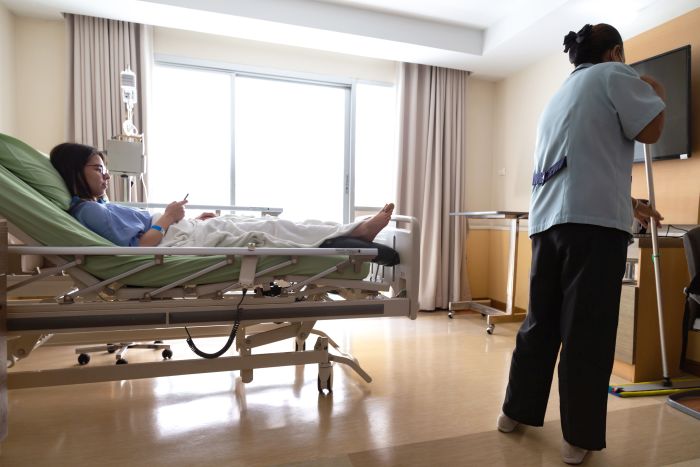
During the on-going COVID-19 pandemic, much has been made over the importance of frontline staff – physicians, nurses, respiratory therapists, EMS. They are the face of healthcare, the “rider” of the horse. And they are so critical, but they are the face of hospitals, not the entire body. In hospitals and other healthcare facilities, no department is less important than another. They all serve the purpose of the hospital body.
The first in this series of articles about the Environmental Services Optimization Playbook (ESOP) introduced to Healthcare Hygiene magazine readers the genesis of the EvSOP project. The San Francisco Bay Area (SFBA) Association for Professionals in Infection Control and Epidemiology (APIC) decided in 2016-2017 to bring together infection preventionists, environmental services (EVS), and allied healthcare professionals. The SFBA APIC Chapter recognized that the hospital body required improvement. Too many departments were, if not overtly, then indirectly, essentially saying: “I don’t need you!”
The lack of essential attention given to EVS and infection prevention (IP) in roles they play in the hospital body had diminished over the years; it couldn’t be ignored any longer. Little did they know that the world would be gripped in the throes of a pandemic three years later and that their efforts in developing EvSOP would be so essential in bringing coordination and deeper integration of those departments to the body.
Prophets of Change
The EvSOP program requires that every participating hospital have a C-suite champion that acts as an advocate for empowerment, support, and change to the EVS department. The champion brings to the highest levels of hospital administration the need for a secure and vital EVS department. Healthcare EVS professionals have, for years, recognized that the patient environment plays a significant role in the transmission of healthcare-associated infections (HAIs). And for years, they have been the watchmen on the gates alerting the powerful that there were multiple enemies at the gates and that the gates were weak. From as early as Florence Nightingale recognizing the importance of the healthcare environment during the Crimean War (1854-18550), those tasked with cleaning and disinfecting the hospital body. Nightingale showed that with an improvement of sanitary methods and conditions of a patient environment, deaths would decrease.
The World Health Organization has been teaching the roles that patient environmental conditions and sanitary improvement have in preventing cross-contamination for years. These are not new revelations by any stretch of the imagination. Why did it take U.S. medical experts so long to embrace and stress these two crucial topics? Why have hospitals taken so long to acknowledge the indispensable collaborative roles EVS and IP have in infection prevention?
Is the U.S. too dependent upon current scientific, peer-reviewed studies of healthcare environments to justify the expenditure of funds to EVS? Are new costly studies to support the findings of John Snow, “The Father of Epidemiology,” Ignaz Semmelweiss, “The Father of Infection Control,” and Joseph Kister, “Pioneer of Antiseptic Surgery” really necessary for corroboration of their findings? These pioneers, along with Florence Nightingale, laid the basic, fundamental, and underlying principles that assisted in saving millions of lives around the world.
Of course, as new pathogens emerge and humankind faces more multidrug-resistant organisms (MDROs), studies are required, but the basic, fundamental principles of cleaning and disinfection are stable and do not change. Thankfully, inventors, researchers, and entrepreneurs are continually working to improve the tools and methods to combat MDROs, but the principles do not change. Pathogens must still be killed or trapped, captured, and removed from the patient care environment.
In an abstract of an article in the American Journal of Infection Control titled “Infection Prevention Technician: A new role to support enhanced hospital environment-of-care rounding,” published in June 2019, Eichelberger and Zirges noted: “Healthcare-associated infections (HAIs) are a significant cause of morbidity and mortality. Studies suggest that environmental contamination plays a role in the transmission of pathogens. Several common pathogens, including Clostridium difficile (C. difficile), Methicillin-resistant Staphylococcus aureus (MRSA), and vancomycin-resistant Enterococcus (VRE), can survive for prolonged periods in the environment, and infections are associated with surface contamination in hospitals.”
In 2015, J. Hudson Garrett Jr., PhD, MSN, MPH, FNP, PLNC, CSRN, CHESP, VA-BC, FACDONA, posted a blog that observed: “Recent scientific evidence shows that the clinical environment of care can serve as a reservoir for growth of pathogens and even more often becomes transiently contaminated, facilitating the spread of pathogens. While hand hygiene remains the most important infection prevention and control measure, the role of the care environment in preventing the transmission of harmful pathogens is becoming increasingly clear.”
Unfortunately, the healthcare community has been slow to invest in EVS personnel, time, training and tools in the efforts to reduce HAIs in the healthcare environment, notwithstanding continual and on-going recognition that the healthcare environment plays in infection prevention and control.
Now, the SARS-CoV-2 pandemic has unfortunately taken the world stage. As of April 27, 2020, hospitals world-wide are facing the challenges of treating more than 3 million known cases, which includes a hospitalization rate of 4.6 per 100,000 population in the United States. As a whole, healthcare facilities have been reluctant to recognize, much less financially invest in addressing the healthcare environment and the essential contribution of EVS. Yes, multiple millions of personal protective equipment (PPE) items have are being injected into US hospitals representing hundreds of millions of dollars. But healthcare cannot continue to have a parochial view of the expansive needs of EVS and IP departments to maintain hygienic environments for patients, staff, and visitors.
In a very enlightening online article in Facility Executive dated April 1, 2020, Weber and Rutala highlight the findings relating to a contaminated environment being a significant aspect of patient exposure to HAI’s. “Unfortunately, many studies have shown that disinfection of surfaces is sub-optimal and that effective disinfection requires not only an effective product but also effective practice.” Effective practice includes on-going training, sufficient time allocation to accomplish assigned duties properly, and the proper tools that are effective for the tasks at hand. (https://facilityexecutive.com/2020/04/covid-19-surface-disinfection-as-prevention-strategy/)
Getting Back to Basics
It is painfully evident that one of the primary mechanisms of disease transmission is via the hands of the healthcare providers and the effect of a contaminated environment. Training of nurses, physicians, and other “clinical” staff on the importance of hand hygiene has seen the infusion of millions upon millions of dollars. In providing hand sanitizing gels, liquids, foams, and aerosols in the fight against HAIs, multiple millions of dollars, and perhaps billions world-wide, are expended. Yet what are we seeing?
Johns Hopkins Medicine reports that healthcare workers only wash their hands 40 percent of the time. According to the CDC 2002 Guidelines for Hand Hygiene in Healthcare Settings, as few as 40 percent of U.S. healthcare workers adhere to hand hygiene practices. It should be painfully clear that hand washing and sanitizing alone is not going to bring home the victory.
Why is it not being recognized by regulatory authorities, epidemiologists, infectious disease physicians, infection prevention professionals, and healthcare administrators that proper handwashing and hand sanitizing in not enough to stem the increase in HAIs? When will these professionals expand their horizons and understand that a contaminated patient environment is a significant aspect of patient exposure to HAIs?
We must ask the question: “Where do the germs that cause HAIs come from?”
The question is too complex to arrive at with such simple answers such as:
• “They come from the patient;” or
• “They come from the healthcare worker;” or ‘They come for the visitors;” or
• “They come in with the packages and belongings visitors bring in;” or
• “They come from an overuse of antibiotics,” or “They come from the patient environment.”
We must look at the whole picture of the interaction of the patient (including family and visitors), the provider, and the patient’s healthcare environment.
Why the emphasis shifts so dramatically toward hand hygiene and away from decontamination or disinfection of the patient care environment? When did the importance, and yes value, of the role of those responsible for cleaning and tending to the healthcare environment become so diminished that resources are diverted to clinical research and “patient-care staff?”
When did the paradigm of “patient care” shift to include only physicians, nurses, therapists, and other licensed professionals and exclude other professionals involved in patient care and the reduction and prevention of contamination from harmful bacteria from the patient environment?
Correlation or Causation?
Is a reduction of EVS resources (size, budgets, training) and the failure to invest in the expansion of Infection Prevention departments over the past decade and the rise in the number of HAIs a correlation or causation?
Is the absence of infection preventionists in long-term care facilities and the lack of a sufficient number of trained EVS staff a correlation or causation for/of the excessive numbers of deaths attributed to COVID-19?
Is there a relationship between the increase in the size of hospitals and the number of HAIs? Why has EVS become an afterthought in the fight against HAIs and the saving of patient lives (excluding the recent spotlight resulting from COVID-19)? Why do healthcare administrators look to reduce full-time equivalents (FTE) rather than reducing overall payroll?
In the military, it is the non-field grade officers, non-commissioned officers, enlisted personnel who are out on the battlefield, and it is those members whose numbers increase when a surge is needed to attain the victory. You don’t find a lot of generals on the battlefield engaging in the actual combat, and you don’t see many C-suite executives disinfecting and cleaning patient rooms.
Yet, it is the lowest-paid rank and file hospital staff that are the first to go when a reduction-in-force occurs. Isn’t there some sort of disconnect in logic there? These questions ought to provoke questions that deserve answers from policymakers, healthcare administrators, and public and private payers.
In an October 2009 presentation titled “Why Environmental Services Saves Lives,” Dick Zoutman, MD, FRCPC, cited numerous definitive clinical studies that conclude that proper and effective environmental cleaning reduces the number of germs present. Again, the question is asked: “Why is this truth taking so long to be recognized in U.S. healthcare venues?”
In 2009, Dancer, et al. in the study titled “Measuring the Effect of Enhanced Cleaning in a UK Hospital: A Prospective Cross-over Study,” clearly demonstrated a direct correlation between the number of EVS staff assigned to patient care areas and the time spent tending to their duties. There are hundreds of other studies that identify the importance of maintaining an uncontaminated patient environment. Yet, they appear to fall on blind eyes and deaf ears. At the same time, HAIs continue to cost healthcare systems (and ultimately governments and patients) billions of dollars each year, more than 100,000 patients contract HAIs each year, hundreds of patients die, families and lives are devastated. The numbers do not tell the whole story. Add to the statistics:
• lost productivity
• lost income
• lost taxes
• family members having to temporarily quit their jobs to care for loved ones at home
Those statistics do not include the 40 percent of the population that will become impoverished caring for their loved ones because they both cannot leave their loved one and cannot find a job after the death of their loved one. Please, research this topic on the internet. We are looking at disaster on a national scale.
In 2013, Marchetti et al., in the Journal of Medical Economics original research titled “Economic Burden of Healthcare-Associated Infection in U.S. Acute Care Hospitals – Societal Perspective,” concluded that “HAIs in U.S. acute-care hospitals lead to direct and indirect costs totaling $96 billion to $147 billion annually.” Keep in mind that this study was in 2013, well before the COVID-19 pandemic and the financial devastation it caused and continues to create. (https://www.researchgate.net/publication/256499741_Economic_Burden_of_Healthcare-Associated_Infection_in_US_Acute_Care_Hospitals_-_Societal_Perspective)
If we are to look even further into the immediate and long-term effects of HAIs on patients, we would see the psychological effects. Hopelessness, helplessness, loss of self-esteem, loss of self-worth, loss of identity, despair, dread, and decline in pursuing one’s purpose of living. All of these have a detrimental effect on a body’s ability to heal. And the financial costs continue to spiral upward.
What about the all-important Right of Informed Consent? Informed consent is the process by which a fully informed patient can participate in choices about his or her healthcare. Informed consent is the legal and ethical rights the patient must direct what happens to and in their body and from the moral duty of the physician to involve the patient in their healthcare decisions. Would an informed patient choose to enter into — much less stay — in a room that not adequately cleaned and decontaminated and risk contracting an HAI? Would a patient willingly risk exposure to an HAI by occupying a place that the staff was allowed only 12 minutes to clean and decontaminate if they knew that the 10-minute dwell time of the typical hospital-grade disinfectant “dwelled” for only two to three minutes? Yet, that is the reality in many healthcare facilities.
On Sept. 24, 2009, the Association for the Healthcare Environment – then knows as ASHES – “reaffirmed previously published Practice Guidance for the minimal time for proper cleaning and surface disinfection of patient rooms. The reaffirmation is due to wide variations in cleaning practices. Over the last several years, the emergence of new microorganisms and the process for removing them from surfaces has required more time and attention, particularly to high touch surfaces.” In their Practice Guidance for Healthcare Environmental Cleaning, the AHE states that an occupied patient room cleaning will take approximately 25-30 minutes per room. The terminal cleaning of a discharged-patient room will take about 40-45 minutes per room.
It takes a collaborative effort by all healthcare disciplines to overcome the challenges that HAIs and MDROs present to healthcare organizations and communities. Healthcare facilities must understand that a clean environment (not just an attractive and pretty one) is of utmost importance if patient outcomes are to result. They must also reinvest in their Environmental Services departments.
Going back to a reference previously made: “On the contrary, those parts of the body that seem to be weaker are indispensable, and the parts that we think are less honorable we treat with special honor.” Something of great importance may depend on apparently trivial detail. Environmental Services is neither mundane nor glamorous, but it is of great importance. Isn’t it time healthcare systems started paying more time, attention, and money to something of great importance?
“And all for the want of a horse-shoe nail.”
Written by John Scherberger, published in the May 2020 issue of Healthcare Hygiene magazine.