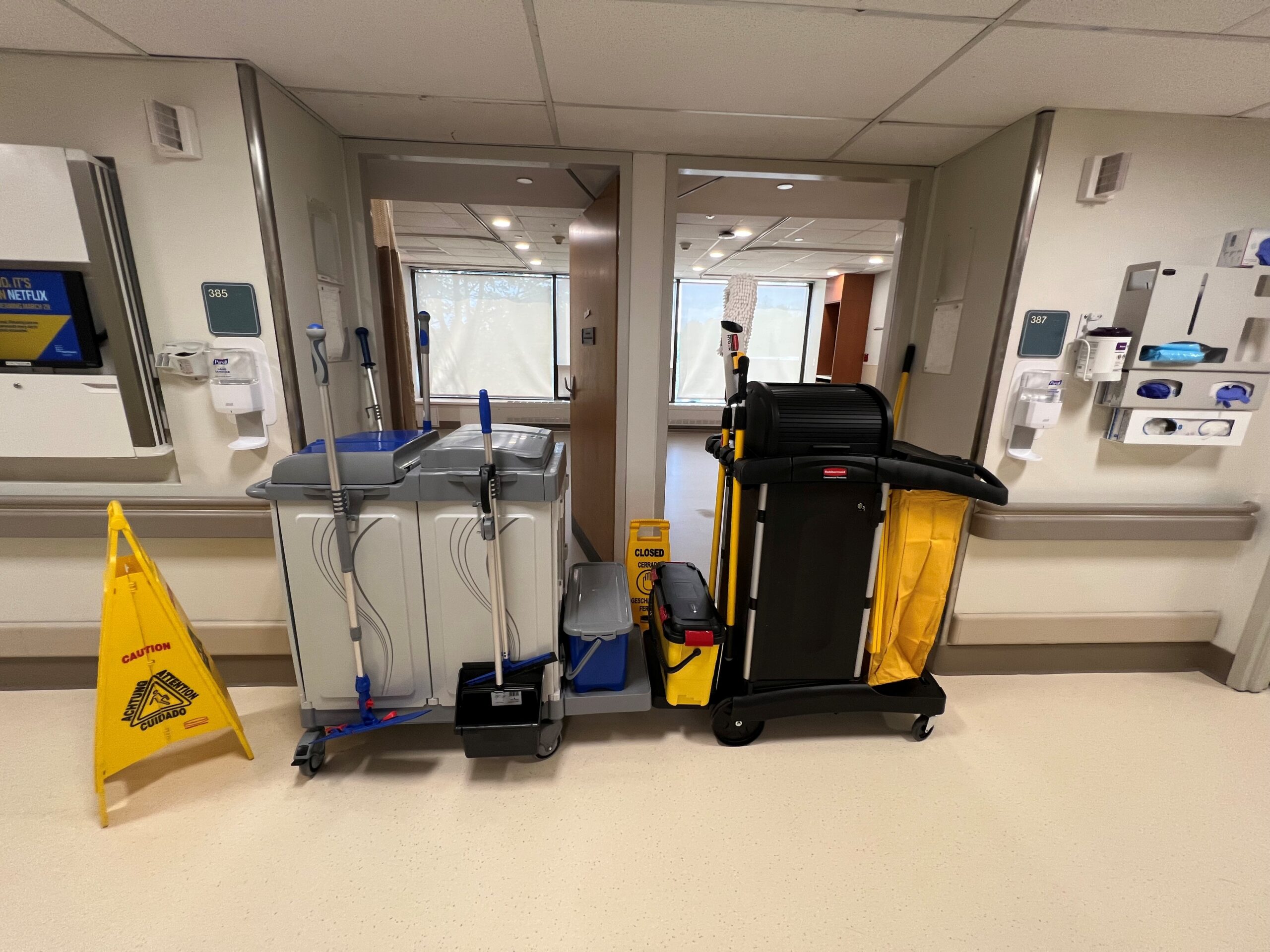
Strategies for EVS Engagement, Recognition and Retention

Today’s workplace is far different than that of past generations. Parents and grandparents typically worked for a single company their entire career. They retired 25 to 50 years later with the proverbial “gold watch” send-off.
How times have changed. Today’s workforce is more complex, more diverse and a maturing society with changing expectations of their work experience. People view their work as an extension of who they are and expect the workplace to contribute to personal fulfillment and offer enhanced opportunities. A new 2020 employee engagement report shows that in today’s workforce, people are looking for more than a salary from the company they work for. Many workers, especially the younger generation, are driven more by the purpose than the paycheck. Today’s employers must recognize these changes and manage for today’s reality.
Increased turnover = increased costs
According to the Association for the Healthcare Environment (AHE), annual turnover for environmental services (EVS) technicians has risen from around 10 percent in 2014 to more than 18 percent. For perspective, this type of turnover is similar to wait staff, warehouse employees, and front lines in hospitality. Considering that EVS technicians have more technical knowledge than these other professions – most notably, how to create an infection-free environment for an incoming patient – this high turnover rate of skilled labor is concerning. It translates to increased training costs, loss of productivity, and emotional wear and tear on the EVS team and their manager. Health Facilities Management magazine reports that replacing an experienced EVS technician can cost as much as 1.5 times their salary.
The process-driven work of an EVS technician entails disinfecting the “invisible” pathogens that cause contamination and outbreaks, both multi-causal and complex. Technicians must treat each room they clean as if their mother were to be the next patient in that room.
Too often administrators and other disciplines undervalue the work of an EVS technician, even though EVS plays a vital role in impacting patient outcomes. Healthcare-acquired infections (HAIs), readmission rates, improved outcomes, patient satisfaction, and reimbursement are some aspects influenced.
U.S. hospitals have reduced their investment in support services including an estimated reduction in EVS technicians by at least 25 percent since 1995, as reported by Infection Control Today. Decrease in staffing has had two unintended and unfavorable consequences: 1) longer working days with accompanied burnout rates; 2) increased payroll costs due to overtime pay. People can’t be at their best when they are overworked and burned out. Fewer EVS staff means delays in patients being admitted into room, which negatively impacts the patient experience.
Recognition à people-focused culture
Too often “recognition and appreciation” is viewed as a soft HR concept that doesn’t matter much and is left to the discretion and skill set of an individual manager. The bottom line as reported by multiple research studies (Gallup, Deloitte and Human Capital Institute) – about two-thirds of departing employees leave because they do not feel appreciated for the work they do.
Recognition is a component to creating an environment in which people feel appreciated for their efforts and motivated to exert their best effort. It is important to note that recognition will, in part, create the conditions of an employer of choice. Recognition alone will positively affect, but not end, the difficult turnover statistics. In order to combat problematic turnover statistics, attention must be given to shaping the culture of an organization around people. The good news here is that building a culture that today’s employee wants to live in – and thrive in – is achievable. There are six key tenants and three pillars that create the employee experience and shape engagement (link to: https://askhillarys.com/creating-the-employee-experience/).
Power of values-based recognition
A successful recognition strategy aligns the organization’s objectives, values, brand, message and voice to bring meaning and relevance to recipients of the program. The Society for Human Resource Management (SHRM) reports that 77 percent of human resource managers say their company has an official employee recognition program. Yet only half of those are tied directly to a company’s core values. If you’re not rewarding employees for actions aligned to values in the recognition program, why have a recognition program?
From ‘meh’ to meaningful
Those celebrating an anniversary were recognized at the organization’s annual holiday party with a plastic plaque award. Many shared they threw it away on their home from the event since they didn’t have a desk where it could be displayed. Those recognized suggested it would be nicer to get a warm personal thank you adding that they felt management didn’t even know who they were.
Based on the audit’s findings, the program was revised to include a personal presentation about each person recognized at the holiday event. In addition, each person received a pin indicating years of service that could be worn on their badge (and has since become a conversation starter). Each employee also receives a gift that reflects their personal interest.
I happened to be on campus the week after the event and ran into several employees who had been recognized. In conversations about their response to the program, there were huge smiles and comments about how their managers and others had made them feel special by doing something thoughtful. They were all sporting their new anniversary pin.
The organization took a carefully thought-out approach with a long-term commitment to ensure the revised recognition program’s continued success. And their new program actually cost less than the one it replaced. For more on the actions of this hospital to create a better culture: https://askhillarys.com/case-study/shaping-culture-in-healthcare/)
Reimagining recognition
Although it is not a new concept, new strains in our healthcare system make employee recognition critical to your success. Recognition nurtures humanity, much like how regularly watering a plant with just the right amount of water encourages it thrive. Without sufficient water, the plant withers; the same is true if the plant is overwatered. Details genuinely make a difference. Recognition for good work — independent or in collaboration — that acknowledges accomplishments, honors those with milestones, and reinforces skill building will increase retention and productivity. Best of all, recognition can and should come in many forms: a pat on the back, a hand-written note, a call out in a department meeting, a simple ‘thank you’. Most importantly, the best recognition is a sincere and specific acknowledgement of the person and their action(s).
Meaningful recognition programs need to extend beyond clinical employees to others like EVS technicians in non-clinical roles. Every role needs to understand how they contribute to the organization’s objectives. Expectations need to cascade from leaders to directors, directors to managers, managers to supervisors all the way to the front line. Senior leaders need to set the tone and model expectations.
Issue –-> insight – -> revised program
Professionals working in healthcare, by their innate nature as a collective group, are compassionate, empathetic, kind to patients, and often humble and reserved about their own accomplishments. Therefore, the fundamental organizational value of “excellence” typically lies under the radar, overlooking many achievements.
To help bring skill accomplishment to life in an environment where professionals would have an opportunity to share their achievements without screaming from the rooftops, we combined a visual structure and imagination. The clinic already had an arrangement of “scrub colors” that represented an employee’s role — front line, supervisor or manager. We took this identification a step further and created a list of skills for each role. These skills when learned would build self-esteem and pride for the individual and create opportunities for career advancement.
When an employee completes CEUs and earns additional credentials, they receive a small embroidered badge/patch that they can sew onto their scrubs. Intended to enable employees to shine, the program has unexpectedly fostered mentoring due to visibility of peer accomplishments.
This program has helped to set the organization up for meeting performance standards, leading to better patient outcomes and positive impact on the bottom line.
How to build a results-orientate recognition system
Developing and implementing a comprehensive strategic recognition system is a key to increasing retention and productivity in today’s workforce. A well thought-out system will include (head, hands and heart). What do employees need to successfully contribute their head (rational thinking), their hands (actions to perform well) and their heart (attachment, commitment and purpose)? A well-planned system will guide your team to work with greater human kindness among each other and toward patients and their families. Here is a proven six-step process to building a results-oriented recognition system.
1. Develop your champions
To successfully create, launch and implement a recognition system you will need champions on your side. Your first champion is one with the authority to make decisions about investing resources (people, time, money) – who will stay the course with you for the long haul. This is most often a senior leader with P/L responsibility. Our experience shows that when leadership actively supports an organization’s recognition objectives, program performance improves.
Your next champions are a group you assemble to do the work of creating, launching and implementing the system. This group of 5-9 people (will vary by the size of your facility) should represent all functions in your facility. For a 100% internal initiative, a leader needs to be selected to steer the ship. Or an outside facilitator can be brought in to lead and navigate with the internal champions doing the day-to-day heavy lifting.
2. Gather your data
Your champions will be best served by first gathering important data points to immerse themselves and understand from a different perspective what is already in place. Develop a list of current practices including all activities, recognition communications, and the moments that are actually recognized.
Gather organizational information including current business objectives, values, voice and brand of the organization. Does your organization take an annual engagement and/or pulse survey? This information will help you understand from a facility and/or department level what employees think. Optimizing your recognition system requires it to follow the “heart” of your organization.
The last element in your data gathering is your overall objective. This will give you a lens through which to evaluate your success and determine what needs refinement.
3. Assess and analyze
Now is the time to map out current practices over 12-months, study it, evaluate it and start asking questions. What is our recognition cadence? How do employees feel about the recognition they receive? What seems to be successful? Do we have gaps where we should be adding recognition practices? What recognition barriers do we face? Be curious and ask questions to help chart your path!
Consider you system’s structure. We have found three essential tactics, that when integrated together, yield the best results: noticing effort, rewarding results, and celebrating personal milestones. This will incorporate recognition that occurs on a day-to-day basis, recognizes progress to larger goals or behavior change and finally metric based recognition that is defined with a set of criteria and processes.
4. Develop your blueprint
Create your system by placing current practices that are meaningful and place them in a recognition category. Which categories need new ideas to fill them out or replace stale initiatives that are not working? Develop ideas as a group some ideas to fill gaps. It’s important to develop an exhaustive list. Then review ideas as a group. Consider ideas that work well together, what is a best fit for the organizations business objectives, values, from a practical/function perspective, and what the group generally thinks will work well. what will work, etc.
Once the recognition moments and a cadence planned, it is time to develop the back-end components that will give your new system life and support sustainability. You have been working closely to create the system. Now you will need to train users of the system, who need to deeply understand how of your plan works. This may mean different training for different levels of employees. Each and every person from senior leaders to the front line plays a role in a meaningful recognition system.
5. Implementation
Rolling out a new system should come with a bit of intentional fanfare. While your champion team may have been developing the system for some time others may only know that a new recognition system has been brewing. To create momentum, bring key leaders into your planning circle to launch. Make sure they have an inside track. Ask them to actively participate in recognition activity to support a successful implementation.
As the system launches, the recognition champion team needs to be in data-gathering mode. Data should be gathered through observation, asking curious questions, listening to stakeholders for their thoughts and more. Collecting qualitatively and quantitatively will help you track how the system is being used, or not and identify pitfalls that need adjustment. The champion team should capture and regularly consider the information. However, resist the temptation to make changes in the short-term. It takes time to change recognition muscle memory.
6. Measure and modify
At predetermined milestones, most often each 90 days of the first year and annually after that, the system should be evaluated for meaning and relevance within your organization. Over time people change, objectives changes, your system needs to by dynamic and revisited with regularity to keep it fresh. When consistency addressed, it will amount to tweaking. If you hit a more significant bump than reimagine with greater effort.
Once you have your completed an entire cycle of implementing, measuring and refining you system it’s time to operationalize it for sustainability and hardwire it into your organization’s cadence and employees’ thinking. Remember, this is a journey, not a race. More details to create your recognition: https://www.zeroinfections.org/improvement-plan-materials-recognition-system/.html
People-first focus
People are always going to be people first and your employee second. EVS technicians and staff are no different than other healthcare disciplines. Yet too often EVS is an afterthought to recognition programs. While everyone is different, everyone has a need for recognition. At the top of Maslow’s Hierarchy of basic human needs is the realization of your talents and potentials, something very intangible. Many people have aspirations to grow and do different things. An employer of choice will listen, observe, recognize motivated individuals they wish to retain, and support their need to grow professionally which feeds personal growth.
Everyone needs to believe that they belong to a team. How will they know they are on a team unless they are treated as a team member? EVS personnel must have a better understanding of how their work contributes to the bitter picture of success. A successful recognition system can help make their work experience meaningful.
For far too long, EVS has been referred to as “housekeeping.” This term is rooted in both the hospitality industry where there is a “front of the house” and a “back of the house.” In other words, “front of the house” should be seen” and “back of the house” should not be seen. “Housekeeping” is also steeped in the tradition of the manor house, where there was a “Housekeeper” that managed the behind-the-scenes activities to keep the manor clean and presentable. It was a “have” and “have not” reality. A “seen, but not heard” lifestyle. That mindset still exists in the hospitality industry where a “guest” leaves for the day and returns to a clean, presentable abode. The room magically is transformed from a “used” to an “unused” state.
However, EVS professionals are a comprehensive, essential, unified, and integral part of the healthcare team. They are no longer just aesthetic “housekeepers.” First and foremost, they are a clinical team that prepares hygienic environments for positive patient outcomes and working conditions. Often under-appreciated, unappreciated, and misunderstood, recognition programs overlook this essential and vital team.
Too often, outdated stereotypical thinking excludes these exceptional members from participating in decision making, including recognition programs. This limited thinking includes the term “uneducated” or “under-educated,” “a warm body,” or “just anyone to move a mop.”
EVS teams are talented, vibrant, problem-solving, motivated, dedicated, trained, conscientious, and caring people. They need recognition, encouragement, support, and thanks just as other dedicated team members. Because they travel the entire health acreage, they see and interact with more staff members than any other discipline. And because they are in non-threatening positions, people speak with them, more than with those in positions of authority. They therefore have a pulse on a hospital’s life-blood – employees. Who better than EVS to have on your recognition committee?
Recognition reaps the rewards of retention
Higher retention derived from a solid recognition program affects several key elements that will have a positive effect on your bottom line:
- Depth of your team’s knowledge (both technical knowledge and institutional knowledge).
- Camaraderie built within your department and across department lines leads to greater trust.
- The patient experience which will affect your HCAHPS.
- Optimized resources focused on ongoing training and professional development in lieu of recruiting and initial training.
EVS technicians have a vital role in our health care system day to clean and disinfect for the safety and well-being of everyone in the facility. I have heard people explain why they don’t recognize (https://askhillarys.com/why-people-do-not-recognize/).) and it’s time to put this provincial list aside.
While developing a recognition system is a large undertaking, consider thinking big, starting small and scaling. How might you do that? Here are a few things you can do today without a system:
- Pay close attention to the work being done and find something to compliment and express appreciation for the way the individual is processing their work; consider highlighting it out at a department meeting or huddle
- Pay attention to detail and who is consistently delivering. Send a hand-written note to that individual’s home address so they can share with their household.
- Pay attention to who is putting in overtime, covering others shifts. Surprise them with a note of thanks and a gift card treating them and their family to dinner. Make sure they know you understand their longer hours means time away from family. Include a gift card inviting them to have dinner on you!
Remember: what gets recognized gets repeated.
Chinese philosopher Lao-Tzu said, “The journey of 1,000 miles begins with the first step.” The first step is always the hardest, so just get started. The recognition destination is worth the journey.
If developing your own recognition system is more than you can take on call us to start the conversation. Learn more about our approach (link: https://www.youtube.com/watch?v=cQz0rPsuDWc&feature=emb_logo)
Written by Hillary Feder, president and founder of Hillary’s LLC, published in the June 2020 issue of Healthcare Hygiene magazine.